
Joan still remembers the moment in her therapist’s office, back around 1980, when the question shifted from what was wrong with her to what she actually wanted. She was in her 30s, single, and certain that marriage wasn’t part of the plan. The therapist, married with children, didn’t push back. Instead, she asked what kind of husband Joan would want, if she had one. Joan listed traits: someone busy, someone absorbed in his own life. When asked if she wanted someone intellectually stimulating, she said no. “I’d want someone who’s never home.”
It came out as a joke. It wasn’t one. That conversation produced what sounded radical at the time: “Some people genuinely live their best lives independently,” Joan said. Now 79, she has spent four decades proving that theory right. She is one of several older women, all single for long stretches, who describe their lives not as a fallback but as a deliberate, satisfying choice.
How the single life became aspirational
For much of modern history, unmarried women were cast as cautionary tales—the old maid, the lonely spinster, the childless cat lady. Singlehood was framed as a temporary stop on the way to finding the One. Not an end goal, and certainly not a fulfilling one. That framing is loosening. The older, unmarried women of this generation are living proof that a life without a husband isn’t a consolation prize.
Related: How to Have Great Sex After 60 According to Experts
The shift shows up in data and pop culture alike. A recent Forbes Health survey found 78% of dating app users on platforms like Tinder, Hinge, and Bumble report feeling burnt out. Sexual inactivity among women has risen roughly 50% over the past decade. Movies like Barbie and Wicked sideline romance in favor of friendship and chosen families. The appetite for those stories reflects something real.
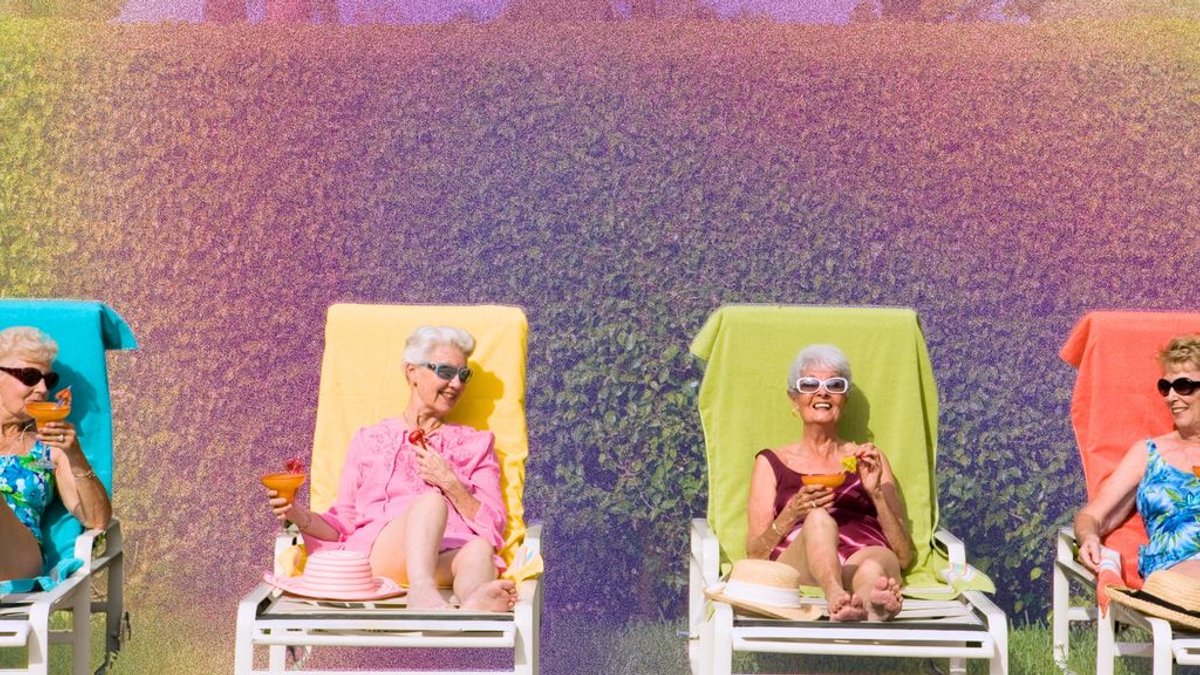
The lived experiences are clearer still. The 70-somethings interviewed for this story have been single for decades and aren’t wishing they’d done it differently. They describe weekly girls’ nights, solo trips planned on a whim, financial freedom to buy property, adopt pets, start small businesses. One 73-year-old put it bluntly: “Not having to bicker or put up with an incompetent man. That’s probably why I’m the least stressed I’ve ever been.”
“Not everyone starts off wanting a romantic relationship”
Sociologist Bella DePaulo, PhD, built a framework around this orientation. She calls it being Single at Heart. These are women who don’t end up alone; they move toward it as a genuine preference. DePaulo, 72, recalls her young adult relationships fondly. “But I remember even more fondly how I felt when each of those relationships ended: finally free.”
The practical benefits of singledom—solitude, strong friendships, fewer relational stressors—aren’t exclusive to unmarried people. But DePaulo argues couples are never free the way single people are. The difference is psychological: the ability to structure a day without reflexively factoring in another person’s needs. “A romantic partner is also there in your mind almost all the time,” she said, even on the periphery. Remove that, and your attention becomes fully your own.
Related: New study reveals gaps in women’s healthcare access
That choice is relatively recent. For centuries, marriage wasn’t just about romance. Women relied on it for financial stability, social acceptance, and a sanctioned path to family, said Kris Marsh, PhD, sociologist and author of The Love Jones Cohort: Single and Living Alone in the Black Middle Class. Greater access to education, careers, and economic independence has eased the pressure. As of 2023, 42% of US adults were unpartnered, according to the Pew Research Center, up from 29% in 1990. Among non-daters younger than 50, half aren’t interested in a relationship.
“Now, a lot of women are looking for something additive,” Marsh said. “I’ve heard over and over, ‘I’m already in a very good place on my own. So you can’t be a distraction. You can’t disrupt my peace.’”
The unexpected joy of your own company
Alice Support, who recently turned 80, followed the cultural script handed to her generation: marry young, raise children, enjoy the stability. “It was fine, but I felt like it was never really about me,” she said. “It wasn’t my life.” Her marriage ended in divorce in 1988. What followed wasn’t the loss she had been taught to fear. It was space. She moved upstate, went back to school, built a new career in nursing.
Related: New School Programs Boost Literacy for Young Readers
“I feel like I’m in my 50s. It’s been so fun,” Support said. “I love being retired. I love traveling. I love having people visit me. I love not having to answer to anybody. I’ve been single for so long and loving this life so much that, honestly, I don’t want to get tied down.”
Research suggests satisfaction with singlehood tends to increase with age, starting for people in their 40s. Still, skepticism lingers about why anyone would willingly stay single. Married people are taken at their word when they claim fulfillment. Those who deviate face scrutiny. “They have to be extra strong, exceptionally confident to stand comfortably in their singleness and validate to the world that they are, in fact, thriving,” Marsh said.
That pressure has an unintended effect. After decades of being asked to justify their lifestyle, many simply stop performing. The women interviewed didn’t overexplain. They weren’t defensive. They just live. What emerges, as Marsh has observed in her research, is a quieter form of happiness—one that isn’t performed and doesn’t ask for external validation. It endures.


