
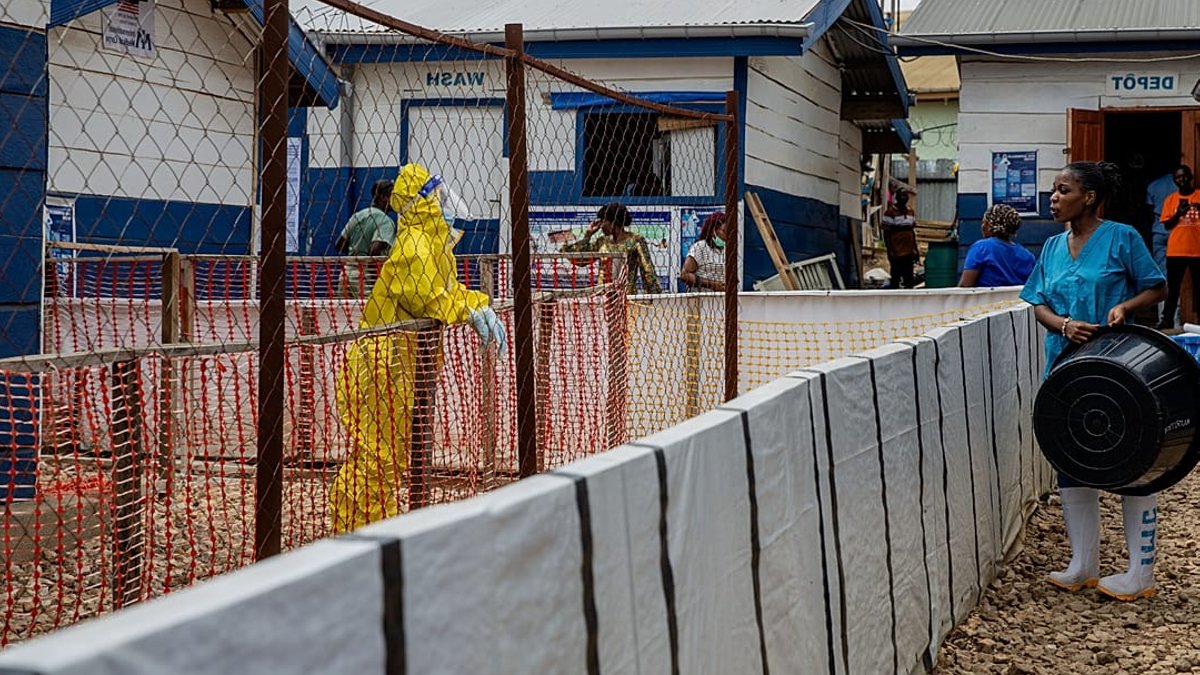
African health ministers are set to hold talks on the Ebola crisis as Nigeria confirms its first case, according to the Africa Centres for Disease Control and Prevention (Africa CDC). The outbreak, which began in Congo, has spread to Kenya and Uganda, with the latter currently having no cases.
The Africa CDC has called for urgent action to contain the outbreak, citing the need for stronger coordination and decisive political leadership. Jean Kaseya, director general of Africa CDC, said, “Ebola is crossing borders. Our response must move faster, with stronger coordination, greater solidarity and decisive political leadership.”
Nigeria reported its first case on Tuesday, linked to a traveller from Uganda who arrived earlier this month. However, Uganda has denied claims that Nigeria’s first case originated there, stating that “travel through Uganda does not establish that infection occurred here.”
The patient, who entered Nigeria on 5 October, was initially treated for malaria but failed to recover, arousing suspicion among attending physicians. The patient is now in isolation and receiving medical care. Nigerian authorities are tracing 44 contacts, mostly healthcare workers, along with the patient’s spouse, a Swiss national.
Read Also: LGBTQ+ youth therapy startup secures $7M funding
Ebola is highly contagious and spreads through direct contact with bodily fluids or contaminated materials. Congo is experiencing its deadliest outbreak, with at least 4,000 deaths and 9,552 confirmed cases since May. The outbreak is caused by the Bundibugyo virus, for which no licensed vaccine or specific treatment exists.
The European Center for Disease Prevention and Control (ECDC) notes that the risk of importation into Europe from the outbreak areas remains very low. While sporadic importations cannot be excluded, the probability of multiple independent importations is very low, even in a pessimistic scenario.
They are also working to prevent the spread of the disease in the community. The patient’s spouse, a Swiss national, is also being monitored and receiving medical care as needed.


