
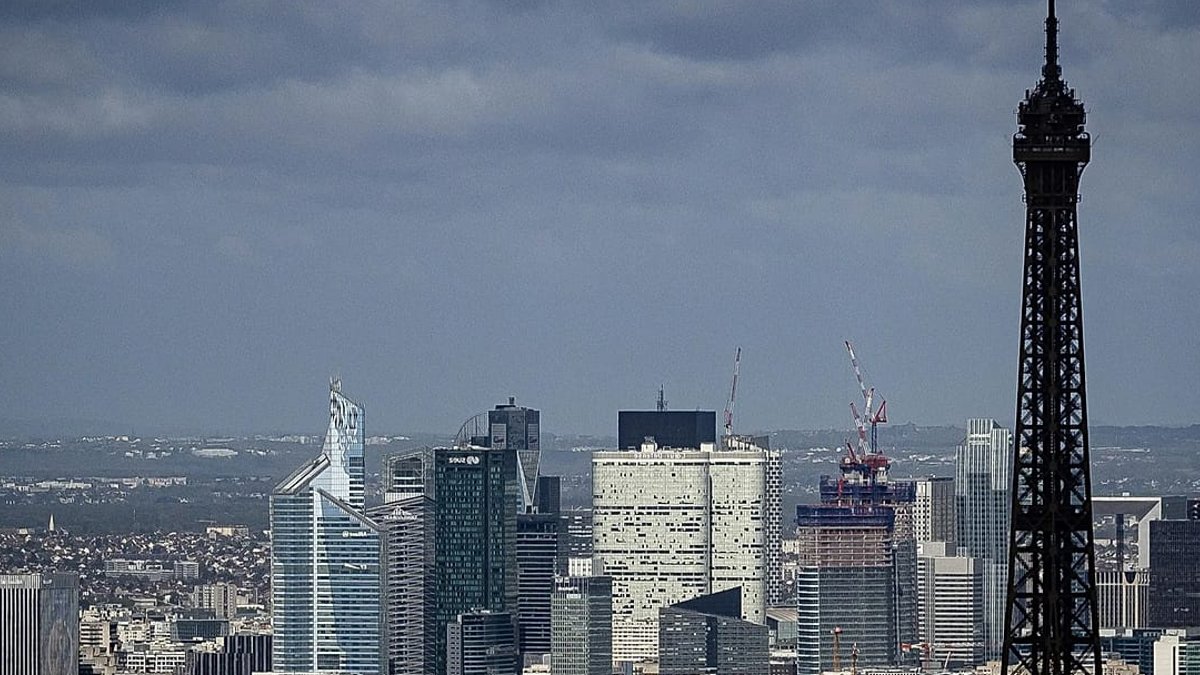
France’s economy is effectively stalled, with GDP shrinking by 0.1% in the third quarter, the National Institute of Statistics and Economic Studies (Insee) confirmed on Friday. The contraction follows stagnation in the second quarter and a 0.2% decline in the first three months of the year, deepening concerns about a prolonged slowdown. The data comes as borrowing costs rise, inflation climbs, and political uncertainty over the 2027 budget threatens to derail economic confidence.
Household spending is one bright spot, growing by 0.4%—a rare positive signal—but it has been outweighed by steep declines in key sectors. Output in transport equipment fell by 3.5%, dragged down by sharp drops in aerospace (4.5%) and automotive (1.5%). The agri-food sector also shrank by 1.5%, reflecting the impact of poor harvests over the summer. Together, these declines have pushed the eurozone’s second-largest economy toward the edge of a technical recession.
Read Also: Eurozone growth slows as inflation pressures mount
Inflation has worsened, reaching 3.4% year-over-year in October, the highest rate since January 2024, adding to the pressure on households and businesses. The combination of stagnant growth, rising prices, and financial market jitters has left economists warning of deeper trouble ahead. Jérémie Peloso, chief strategist for Europe at BCA Research, told Euronews that France is “highly likely to experience a technical recession over the coming quarters.” He noted that even before the latest budget turmoil and bond market sell-off, the outlook had been grim.
“We will hit the wall,” Economy and Finance Minister Roland Lescure said on Franceinfo, describing the economy as “at a standstill.” His warning shows the government’s urgency in securing passage of the 2027 budget, though its majority in parliament is fragile. If parliamentary talks fail, the government is not ruling out using article 49.3 of the Constitution, which allows a bill to be passed without a vote, unless a motion of no confidence is carried. Another option, using ordinances, has never been applied to a budget since the Fifth Republic began in 1958.
Jérôme Mathis, an economics professor at Paris-Dauphine University, dismissed the idea that a budget’s adoption alone would spark a recovery. The deeper issue, he argued, is not the absence of a budget but the lack of clarity about France’s long-term fiscal path. Rising borrowing costs, 10-year government bond yields now sit at 4.9%, just below the October peak, are squeezing public finances and discouraging private investment.
Read Also: US measles surge highlights global risk
Markets are not questioning France’s technical ability to raise taxes or repay its debt. They are more doubtful about its ability to slow their increase. Uncertainty is already taking a toll. Companies delay investments, households postpone spending, and lenders demand higher risk premiums. The Franco-German borrowing spread, a key indicator of investor confidence, remains near 1.55 percentage points, reflecting persistent doubts about France’s economic direction.
The European Central Bank’s latest meeting may have eased some pressure, but its president, Christine Lagarde, declined to address France’s specific challenges. Mathis emphasized that the economic cost of the current deadlock lies less in the measures themselves than in the prolonged lack of resolution.


